
Nearly half of adults over 30 have some form of gum disease. And most of them don’t even know it. That’s why we call it a silent threat. It creeps up slowly. It doesn’t always hurt. And by the time you notice something’s wrong, it’s often advanced.
Let’s talk about what gum disease actually is, how to spot it, and most importantly, what you can do about it.
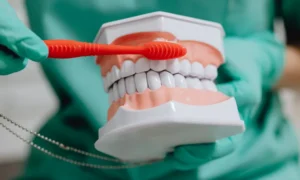
What Is Gum Disease?
Gum disease starts with bacteria. Plaque builds up along your gumline. If you don’t remove it, it hardens into tartar. That tartar irritates your gums and causes inflammation.
The early stage is called gingivitis. Your gums might look red or swollen. They might bleed when you brush or floss. At this point, the damage is reversible with good care.
But if you ignore it, things get worse. The infection spreads below the gumline. It starts attacking the bone that holds your teeth in place. This is called periodontitis. And this stage isn’t reversible.
The Warning Signs You Shouldn’t Ignore
Gum disease doesn’t announce itself with a loud bang. It whispers. Here’s what to listen for:
- Bleeding when you brush or floss: This is the biggest red flag. Healthy gums don’t bleed. If you see pink in the sink, don’t brush it off.
- Swollen or tender gums: They might look redder than usual. They might feel puffy or sore.
- Persistent bad breath: Bacteria produce odors. If your breath doesn’t improve with brushing, it could be a sign of infection.
- Gums pulling away from your teeth: Your teeth might look longer than they used to. That means your gums are receding.
- Loose teeth or shifting: This is a later sign. The bone supporting your teeth is breaking down.
- Changes in your bite: If your teeth don’t fit together the same way, something’s changed underneath.
Why We Take It So Seriously
Gum disease isn’t just about your mouth. It’s connected to your overall health. We’ve seen research linking periodontal disease to heart disease, diabetes, and even pregnancy complications. The inflammation in your gums can affect other parts of your body. Your mouth isn’t separate from the rest of you. It’s all connected.
That’s why we treat gum disease as a medical issue, not just a dental one.
What We Can Do About It
If we catch it early, the solution is simple. We do a deep cleaning called scaling and root planing. We remove the tartar from below your gumline and smooth the root surfaces so your gums can reattach.
For more advanced cases, we use LANAP®. That’s our laser treatment for gum disease. It’s gentle and precise. The laser targets bacteria and diseased tissue while leaving healthy tissue alone. It promotes healing and can even encourage new bone growth.
Dr. Ana Kodra, our periodontist, specializes in these treatments. She’s trained to handle everything from mild gingivitis to advanced periodontitis.
What You Can Do At Home
Prevention is always better than treatment. Here’s what we recommend:
- Brush twice a day: Two minutes each time. Don’t rush.
- Floss daily: This is non-negotiable. Flossing reaches what your brush can’t.
- Use an antibacterial mouthwash: It helps reduce plaque between brushings.
- Don’t smoke: Smoking weakens your immune system and makes it harder to fight infection.
- Visit us regularly: We can spot problems you can’t see.
Don’t Wait
Gum disease is common. But it’s also treatable, especially when we catch it early. If you’ve noticed any of the signs we mentioned, don’t wait. Your gums aren’t going to get better on their own. They’ll only get worse.
We want to help you keep your natural teeth for a lifetime. And that starts with healthy gums.
Ready to Take the First Step?
You don’t need to have symptoms to schedule a check-up. Most people don’t. Call us at 610-590-9250 to book a gum evaluation. We’ll take a look, measure your gum pockets, and give you a clear picture of your oral health.
We’ve been caring for smiles on the Main Line for generations. Let us help protect yours too.